
THE IVY COLLECTION
Elegant dining made simple
THE IVY COLLECTION
Glamorous everyday dining
From one iconic London restaurant into a modern, glamorous brand with over 35 locations across Britain
THE PROBLEM
How can I create a modern restaurant brand and a unique experience based on an existing traditional brand + identity and its perceived glamorous legacy?
The client is a restaurant group aiming to establish and develop a glamorous dining brand, focusing on its identity and various applications. The primary emphasis is on enhancing the customer experience, as well as improving interactions with the staff and operational teams.
How can I create a brand that reflects a desirable dining experience and encourages trust and loyalty? How do all the applications and their components interact with the customers?
The problem manifested in various ways, impacting different users along their unique journeys. For customers, the experience encompasses planning, booking, dining, payment, and post-dining interactions. Meanwhile, the journey for The Ivy Collection staff and its various operation teams also presents its own set of challenges.
MY ROLE
Branding, Digital and UX/UI Designer
RESPONSBILITIES
Brand Strategy, Development and Design
Menus and Collateral Brand Identity
Digital and UX &UI / Website and App
Packaging / Beverages Label Design
I worked closely with various stakeholders and teams and helped to develop and deliver a wide range of design systems and applications.
The Ivy Collection owners, Training and Development team, HR, Marketing Manager, Development Kitchen and Executive Chefs, Private Dining Manager, Operation Managers and Restaurants Managers.

UNDERSTANDING THE USER
Catering to all users - enhancing the front and
back-of-house experience
WHO ARE MY USERS ?
The restaurant experience process involves various user groups: customers, restaurant staff, management and operations, technical support, suppliers, and stakeholders. Each user group plays a vital role in ensuring a seamless, efficient, and enjoyable dining experience, which is essential for the restaurant's overall success and user satisfaction.
Focus / Customers
WHO ARE MY CUSTOMERS?
The Customers range form Individual diners, groups and families, business professionals to special occasion diners
WHAT ARE THE THEY TRYING TO DO?
Customers aim to book tables efficiently, enjoy prompt service, savour high-quality food, and dine in a comfortable environment. They seek personalised service and convenient payment options, and appreciate post-dining engagement through loyalty programs.
HOW?
Customers achieve these goals by researching reviews, interacting positively with staff, using technology for reservations and payments, providing online feedback, and showing loyalty through repeat visits and participation in loyalty programs.
Competitive analysis / interviews and observations

/ Understanding the user
"If you want users to like your software, we should design it to behave like a likable person: respectful, generous, and helpful." — Alan Cooper.
BREAKING DOWN THE PROCESS
The brand story
Embarking on the branding and identity design journey / the goals and methods behind the brand evolution
THE VISION
Working closely with the business owners helped me understand the vision for this brand. Focusing on the mission, the values and unique selling points, I started to create a visual language and developed a brand story aiming to capture the audience attention.
THE BRAND EVOLUTION
ONE RESTAURANT AT A TIME

From a vague brief to numerous iterations, feedback sessions, and extensive testing of various "old school" printed menus, we meticulously deconstructed the process to determine what works best for both customers and the brand as a whole.
As the Ivy brand evolved—from the Ivy Market Grill to the Ivy Chelsea Garden, Ivy Cafes, and Ivy Brasseries—the strategy became clearer. With more data collected from visitors and operations teams, we systematically refined the design and its interactions with customers, ensuring a consistent and engaging experience across the board.


Mapping the systems
Understanding system interactions and enhancing customer-focused areas
As the company grew, more systems were put into place. On one hand, these systems enhanced the customer journey, from booking to post dining, and on the other, they supported the numerous operation teams, which all interlinked with the broader team.
With various tech providers it became clear that brand consistency needed to be addressed - especially those affecting the customer user experience directly such as:
-
Direct online reservations (online booking)
-
'Pay at Table' system


User/customer journey
Improving customer-centric areas /
Mapping the dining experience in restaurants
PROBLEM 1 / Online reservations
How can I optimise table booking process on the Ivy Collection desktop website, improve user experience, and ensure brand consistency?

booking a table > dining > payment > reviews & feedback
STEPS
Visit website > search and select availability date/time/number of people >
> fill contact details form > booking confirmation > reviews and feedback
Gathering insights from the research process, I mapped out the stages of table booking, as well as the user's pain points. However, given the system was built - using Open table as a provider had its limitation but was a starting point.
USER'S KEY PROBLEMS:
-
Difficulty finding the booking option
-
Lengthy booking process
-
Unclear availability information
-
Poor device optimisation - desktop vs mobile experience
20-30% of users who start the booking process don't complete it
40-50% of online bookings are made via mobile devices in London
Reshaping functionality, flows and navigations
+ Design
Based on user research and established design best practices, I prioritised discoverability, minimised cognitive load, and optimises task completion efficiency. This focus on user experience resulted in a smoother booking journey, ultimately driving higher number of reservations.
PLANNING USER'S INTERACTIONS AND FLOW
Taking a step back to examine the user flow during the booking process.

Design and Iterations / actions and testing
Improve discovery, consistency and efficiency / optimise task completion and flow
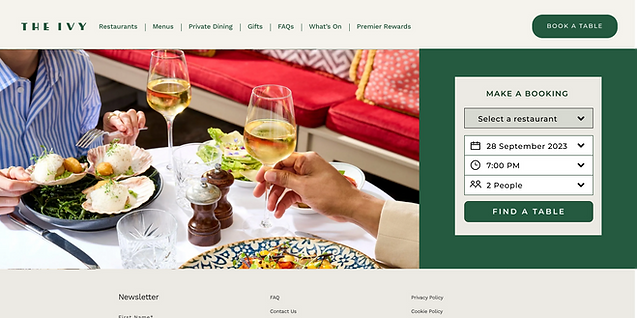
Homepage - create a prominent 'Book a Table' CTA button
Designing a search box to fit a responsive website for multiple devices was helpful, while keeping design within brand guidelines.




Improve selection efficiency / optimise task completion
Allowing users to switch between typing and scrolling effortlessly. Reduce the time and effort users need to spend on selection.
Before / book a table page


Page hierarchy and efficiency
Creating a clear page hierarchy with well-defined headings and optimising the design to fit device.
Providing flexibility and displaying booking availability for the chosen restaurant or nearby affiliated options encourages users to complete their booking.
After / book a table page


Simplify forms / optimise task completion
Requesting only necessary details in order to reducing time spent on task and reduce booking abandonment.
Challenges and Compromises
Given the existing system was provided by Open table had its various limitations and design restrictions, which weren't always aligned with the brand needs and overall design experience.
Designing a smooth booking experience for a group with 35 restaurants is more challenging and needs further testing and iterations and in order to improve task completion and reduce abondoment rate .
PROBLEM 2 / 'Pay at Table'
How can I enhance the pay-at-table experience, offering flexibility while ensuring brand alignment?


booking a table > dining > payment > reviews & feedback
STEPS
Scan QR code (at table) > View and check bill > select a payment >
> one payment / split the bill - selecting dishes / split the bill between users > processing payment > payment confirmation - on screen / emails/ messages
Interviewing the team and observing both staff and customers provided critical information for mapping the user's journey, identifying pain points, and highlighting areas for improvement. This initial pitch presentation serves as a foundation to engage with various system providers, aiming to find a balanced and effective solution.
Some common Pay at Table problems
01
Difficulty finding
the payment

02
Difficulty
splitting the bill

03
Lack of
payment options

04
No receipt or
payment confirmation

To address these issues, I proposed streamlining the process, simplifying the interface, enhancing security, improving reliability, and ensuring consistent performance. These solutions aim to improve user experience and boost customer satisfaction.
PLANNING USER'S INTERACTIONS AND FLOW
Taking a step back to examine the user flow during the payment process.


Solutions / Design and testing
Simplifying to improve discovery and efficiency + Allowing payment flexibility
The design addressed key challenges that users and staff reported ; allowing the user more flexibility to navigate and pay the bill without the staff involvement.

Pay full bill

Pay for items
Divide bill
Pay A custom amount


Flexibility in choosing the bill splitting method: select from listed items, equal division, or specify an amount.
Improving visibility and system status with large 'call to action' buttons
Creating heircehy and systemising layouts and navigations
System visibility to encourage trust and improve flow


SOME KEY LEARNINGS…
With high booking abandonment rate… each interaction needs to be flawless
20-30% of users who started their booking process don't complete it - therefore good design practice is essential.
Consistent quality experience improves conversion rates
A consistent level of quality and service, leading to higher satisfaction and conversion rates

LESSONS LEARNED
Everything counts … a seamless, secure, and intuitive experience fosters trust and loyalty, while even minor mistakes can have lasting negative impacts.
Prioritising user satisfaction through simplicity, robust functionality, clear communication, and responsive support is essential. In user experience, every interaction matters.